
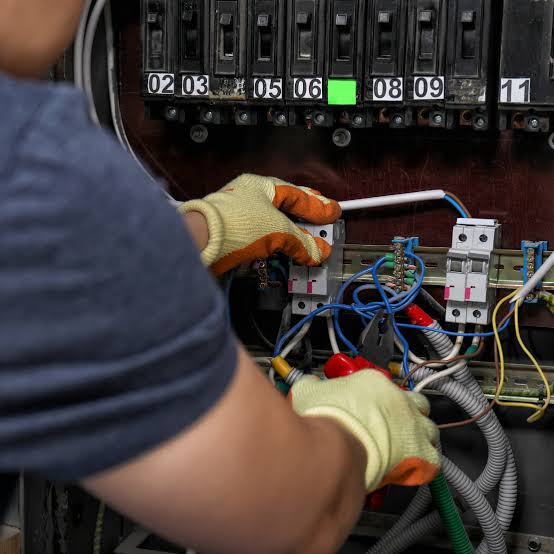
residential electrical code inspection in Miami is essential. This definitive 3000-word guide details what inspectors look for, how we guarantee your home is compliant, and why it’s crucial for permits, sales, and safety.
The words “code inspection” can evoke a unique sense of anxiety for any Miami homeowner. It conjures images of a clipboard-wielding official, a stranger navigating the personal space of your home, scrutinizing every wire, every outlet, every connection with a critical, uncompromising eye. It’s a process that can feel invasive, opaque, and profoundly stressful, especially when the safety, legality, and financial value of your single largest asset hang in the balance. But when it comes to a residential electrical code inspection, the first and most crucial step is to reframe this perspective. This isn’t an adversarial process designed to find fault or levy penalties; it’s a collaborative, legally mandated verification designed to confirm one simple, non-negotiable fact: that your home’s electrical system is safe for you, your family, your neighbors, and the entire community. Whether you’ve just completed a breathtaking, multi-million dollar renovation on your historic Coral Gables estate, are in the complex process of selling a luxury high-rise condo in the vibrant, 24/7 pulse of South Beach, or are being required by your insurance provider to update an aging, potentially hazardous system in a classic, charming Little Havana bungalow, ensuring your property is fully compliant with the latest, rigorously enforced Florida Building Code (FBC) and the National Electrical Code (NEC) is an absolute, unassailable necessity.
My name is [Your Name/Company Name], and for the better part of a decade, my professional identity and the core mission of my company have evolved far beyond the traditional role of an electrician. We act as crucial liaisons, expert translators, and staunch advocates for Miami-Dade homeowners. We bridge the cavernous gap between your dream for your home—that perfect kitchen, that serene backyard oasis, that state-of-the-art home office—and the complex, often bewilderingly technical language of the electrical code. Our specialization is not just in pulling wires; it’s in proactive, strategic planning. We conduct exhaustive pre-inspection audits, execute meticulous, code-perfect corrections, and manage the entire permitting process from application to final sign-off. Our goal is to ensure that when the official city or county inspector arrives at your property, the inspection is not a gamble, but a formality. A failed inspection is a cascade of negative consequences: project-halting “stop-work” orders, frustrating and costly delays, unexpected budget overruns, and immense personal stress. Our entire business model is engineered to prevent that from ever happening. We have successfully guided countless clients—from international business executives in the gleaming towers of Brickell to young, growing families establishing roots in the spacious suburbs of Pinecrest—through the intricate, bureaucratic dance of permits and inspections. We don’t just know the code; we know the local amendments, the specific points of emphasis, and even the individual preferences of inspectors in different municipalities across Miami-Dade, giving our clients an unparalleled strategic advantage.
This guide is intended to be the most exhaustive, definitive resource ever created for the Miami homeowner facing the prospect of an electrical inspection. We will not just scratch the surface; we will pull back the curtain entirely and demystify every facet of the process. We will detail not just what inspectors are meticulously looking for, but more importantly, why they’re looking for it, connecting every abstract code requirement to a tangible, real-world safety principle that could one day save a life. We will transparently lay out our own meticulous methodology for preparing a home to not only meet but significantly exceed these stringent standards, creating a system built for longevity and safety. Most importantly, through detailed explanations and practical examples, we will illustrate with absolute clarity why a fully code-compliant home is not a burdensome expense, but one of the most vital, value-enhancing, and prudent investments you can possibly make—an investment that directly enhances your family’s safety, secures your property’s financial value, and ensures your peace of mind for decades to come.
The Inspector’s Checklist: A Deep Dive into the Core Requirements for Miami Homes
A formal residential electrical code inspection is a forensic examination, not a casual walkthrough. It is a world away from a general “safety check-up” that a friend or a handyman might perform. A general check is subjective, based on experience and opinion, and aims to identify obvious potential risks. A code inspection is objective, absolute, and based on a legal document. The inspector’s judgment is bound by the explicit text of the NEC, as adopted and amended by the state of Florida and Miami-Dade County. Their checklist is exhaustive, a living document refined over a century of analyzing electrical fires, accidents, and fatalities. While the full code spans thousands of pages of dense, technical language, an inspector’s focus during a typical residential visit—whether it’s a “rough-in” inspection (before the walls are closed) or a “final” inspection—revolves around several core pillars of safety, workmanship, and legal compliance. A deep understanding of these pillars is not just helpful; it’s the only way to guarantee a first-pass success.
Pillar 1: The Sanctity of Grounding and Bonding
This is the absolute bedrock of modern electrical safety, the system’s primary life-saving feature, and consequently, the first and most critical area of an inspector’s examination. Its function is simple: to provide a safe, unobstructed emergency exit for dangerous fault current. In a perfect world, electricity flows in a closed loop. But in the real world, wires fray, insulation fails, and connections loosen. When a “hot” wire accidentally makes contact with a conductive surface—the metal frame of your dishwasher, the casing of a light fixture, or a metal junction box—that object becomes electrified, a silent trap waiting for a human to complete the circuit to the ground, resulting in severe shock or electrocution. The grounding system provides a path of least resistance, an electrical superhighway, for this fault current to race back to the panel, causing a near-instantaneous surge that trips the circuit breaker.
The inspector’s verification of this system is multi-faceted.
* The Grounding Electrode System: They will begin at the source, examining your home’s connection to the earth itself. In most Miami homes, this is a “Grounding Electrode System” typically composed of two 8-foot copper-clad steel rods driven into the ground at least 6 feet apart. The inspector will check the integrity of the heavy-gauge copper wire (the Grounding Electrode Conductor) connecting these rods to your main electrical panel. They will scrutinize the “acorn clamps” used for these connections, looking for any signs of corrosion or looseness. In the salty, humid air of coastal communities like Key Biscayne and Miami Beach, these clamps are notorious failure points, and inspectors know it. A corroded clamp can sever your home’s connection to the earth.
* Inter-system Bonding: The inspector will then verify that all other metallic systems entering the home are “bonded” (connected) to the main electrical grounding system. This includes your copper water pipes, your natural gas lines, and the coaxial cable from your internet provider. This bonding ensures that all metallic systems are at the same electrical potential, preventing dangerous voltage differences between, say, your faucet and a nearby appliance during a fault.
* Equipment Grounding: Finally, they will spot-check devices throughout the home. They will use a specialized tester to confirm that the third, U-shaped prong on your outlets is properly connected to the grounding system. They will check that light fixtures, ceiling fans, and major appliances are all properly grounded. A missing or broken ground wire on a single outlet can be grounds for a failed inspection.
Pillar 2: The Science of Circuit Protection and Panelboard Integrity
Your electrical panel is the command center, and it receives a level of scrutiny commensurate with its importance. The inspector is looking for evidence of a safe, well-planned, and professionally executed installation.
* Breaker-to-Wire Sizing: This is a fundamental, non-negotiable check. The inspector will confirm that the amperage of each circuit breaker correctly corresponds to the gauge of the wire it protects. A 15-amp breaker must protect a 14-gauge wire (typically used for lighting). A 20-amp breaker must protect a 12-gauge wire (for outlets in kitchens, bathrooms, and garages). A 30-amp breaker must protect a 10-gauge wire (for dryers and water heaters). Installing a larger breaker on a smaller wire is one of the most dangerous code violations, as it turns the wire itself into a fuse, allowing it to overheat and ignite a fire long before the breaker ever trips. This is a common mistake in DIY projects in areas like Wynwood where homeowners might try to “upgrade” a circuit simply by swapping a breaker.
* AFCI and GFCI Protection: The inspector will verify that modern, life-saving breaker technologies are used according to the latest code. Ground-Fault Circuit Interrupters (GFCIs) are required in all locations where electricity and water can mix: kitchens (all countertop outlets), bathrooms, garages, unfinished basements, crawlspaces, and all exterior outlets. They detect minute imbalances in current and shut off power in milliseconds to prevent shock. Arc-Fault Circuit Interrupters (AFCIs) are a newer requirement and are mandated for nearly all living spaces, including bedrooms, living rooms, dining rooms, closets, and hallways. They are designed to detect the unique electrical “signature” of dangerous arcing—the sparking that occurs from a damaged cord, a loose connection, or a wire pierced by a nail—which is a leading cause of electrical fires. A new home office built in an Edgewater apartment will absolutely require AFCI protection.
* Panelboard Condition and Legibility: The physical state of the panel is a direct reflection of the quality of the work. The inspector will look for a clean, organized panel. All breakers must be from a manufacturer approved for use in that specific panel (no mixing brands indiscriminately). The panel directory must be filled out neatly and accurately, identifying the purpose of each circuit. All knockouts (the round, pre-stamped holes in the panel box) must be filled with a proper plug if not used for a wire. An open hole is an immediate failure, as it exposes live, high-voltage bus bars. They will also check for any signs of overheating, such as discolored or melted plastic on the breakers, or scorch marks on the panel itself.
Pillar 3: The Art of Workmanship and Installation Practices
This is where the inspector judges the “craft” of the electrician. It’s a broad category that covers the physical installation of every component in the system.
* Cable Routing and Protection: Wires cannot simply be run haphazardly. The inspector will check that cables are properly supported and stapled to framing members at required intervals (typically every 4.5 feet and within 12 inches of any box). When cables pass through holes drilled in wooden studs, they must be centered, or if they are close to the edge, they must be protected by a steel nail plate to prevent future penetration by a drywall screw or nail. This is a key focus in “rough-in” inspections before the walls are closed.
* Box Fill and Conductor Management: Every electrical box has a maximum volume, and the code specifies how many wires, devices (outlets/switches), and clamps can safely occupy that space. Over-stuffing a box is a fire hazard as it prevents heat from dissipating. The inspector will mentally calculate the “box fill” on several key boxes. Inside, they will look for at least 6 inches of free wire (conductor) extending from the opening, which is required for safe and easy future servicing. They will check that all connections are made with properly sized wire nuts and are twisted securely.
* Device Installation and Finishing: The final details matter immensely. Outlets and switches must be mounted securely and squarely in their boxes. The faceplate must sit perfectly flush against the finished wall surface with no gaps. In a luxury renovation in the Design District, where clean lines are everything, a sloppy faceplate is an immediate sign of unprofessional work. All outdoor installations, from light fixtures on a Coconut Grove patio to outlets for landscape lighting in a Pinecrest yard, must be in proper weatherproof enclosures (“in-use” covers) and be rated for wet locations.
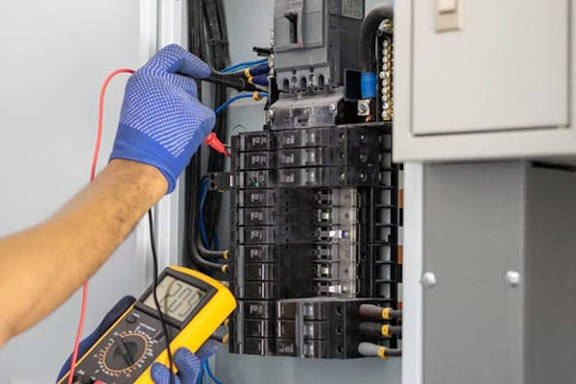
Our pre-inspection audit is a painstaking simulation of this entire process. We become the inspector, using the same checklists and the same critical eye to find and rectify every single potential violation, no matter how small, ensuring your project is primed for a first-pass approval.
The “Why” Behind the Code: Securing Permits, Property Value, and Your Family’s Future
Why voluntarily subject your home and your finances to the rigorous, uncompromising standards of a residential electrical code inspection? The answer is a powerful trifecta of legal necessity, financial prudence, and the profound, unquantifiable value of safety. For a growing number of Miami homeowners, the process is not a choice but a legal mandate. If you have undertaken any electrical work that goes beyond the simple, cosmetic replacement of a light fixture or a single outlet, you are legally required to obtain a permit from your local building department before the work begins. This applies to virtually all common projects: a kitchen remodel in Downtown Miami, finishing a basement, adding a pool or hot tub, installing a new air conditioning system, or even running a new circuit for an EV charger in your Midtown garage. That permit remains “open,” a red flag on your property’s official record, until the work has been inspected and formally approved by a city or county official. The consequences of ignoring this process can be severe. A neighbor’s complaint or a chance observation by a city official can result in an immediate “stop-work” order, bringing your entire project to a grinding halt. This is often followed by substantial fines and, in some cases, the dreaded requirement to tear out finished walls, ceilings, and floors to expose the unpermitted work for a retroactive inspection—a financial and emotional catastrophe. More commonly, the problem surfaces when you try to sell your home. A routine title search will reveal the open permit, and no sane buyer or mortgage lender will proceed until the issue is resolved, forcing you into a desperate, last-minute scramble to get the work inspected and approved, often at a premium cost and under immense pressure. A passed inspection is not just a piece of paper; it’s the legal key that unlocks your project’s completion and your property’s future marketability.
Beyond the immediate legalities of permitting, embracing code compliance is one of the most astute financial decisions a homeowner can make. It directly protects and enhances your property’s value. In a competitive real estate market like Miami’s, buyers are more educated and cautious than ever. When faced with two comparable properties, one with a clean, verifiable history of permitted, code-compliant upgrades and another with a murky past of unpermitted “handyman specials,” the choice is clear. The compliant home represents security, quality, and a lower risk of future problems. It is a premium asset, and buyers are often willing to pay a premium for that peace of mind. A portfolio of closed permits is a powerful selling tool. The inverse is also true. A home with known code violations or a history of unpermitted work is a major liability. It can scare away the best buyers, attract predatory low-ball offers, and significantly prolong the time your home sits on the market. The financial calculus extends to your relationship with your homeowner’s insurance provider. Insurance is a business of risk assessment. In the tragic event of a house fire, their first action will be to launch a forensic investigation to determine the cause. If their experts conclude that the fire originated from faulty, non-compliant electrical work that was not properly permitted, they may have strong legal grounds to deny your claim entirely. The money you thought you were “saving” by cutting corners could evaporate in an instant, leaving you with the total, uninsured loss of your single greatest asset. A clean bill of electrical health is a foundational component of your family’s financial security.
But the most profound, resonant, and important reason to care deeply about the electrical code is the one that cannot be quantified on a spreadsheet or an appraisal report: the physical safety of the people you love. The National Electrical Code is not a theoretical document drafted by academics. It is a living, breathing rulebook, updated every three years by a consortium of the nation’s top engineers, electricians, firefighters, and safety experts. Every single rule within its thousands of pages is a lesson learned, often from a real-world tragedy. The rule specifying the maximum distance between kitchen countertop outlets exists to prevent the dangerous use of extension cords. The requirement for tamper-resistant receptacles exists because of the thousands of children who are injured each year by inserting objects into outlets. The mandate for AFCI breakers exists because of the countless fires that have started silently and invisibly inside walls from a tiny, persistent electrical arc. When you ensure your home is fully code-compliant, you are not just “following rules.” You are actively implementing a comprehensive, multi-layered, and time-tested system of safety measures. You are leveraging over a century of collected, hard-won wisdom on how to coexist safely with one of nature’s most powerful and unforgiving forces. It is the ultimate expression of responsible homeownership, a tangible demonstration of your commitment to your family’s well-being. Our mission, our passion, and our profession is to make that supreme level of safety, compliance, and peace of mind an accessible, understandable, and stress-free reality for every single one of our clients.
We are Miami’s premier specialists in electrical code compliance, pre-inspection audits, and permit facilitation.
Find Service in Your Neighborhood:
* Brickell: High-rise condo electrical specialists.
* Downtown Miami: Fast service for busy professionals.
* Coral Gables: Experts in historic and luxury home wiring.
* Coconut Grove: Protecting and upgrading Grove’s unique homes.
* South Beach: Your go-to for Art Deco and modern apartment electrical needs.
* Miami Beach: Waterfront property electrical safety and repairs.
* Design District: Custom solutions for creative spaces.
* Wynwood: Servicing lofts, galleries, and residential homes.
* Edgewater: Modern solutions for modern living.
* Midtown: Comprehensive electrical services for condos and townhomes.
* Little Havana: Experienced with the charm and challenges of classic Miami homes.
* Key Biscayne: Salty air corrosion experts and safety upgrades.
* Pinecrest: Family-focused safety and electrical upgrades.
If you are facing an upcoming inspection, planning a renovation, or want to ensure your home is as safe as it can possibly be, contact us today at [Your Phone Number] for a professional, comprehensive pre-inspection audit.