
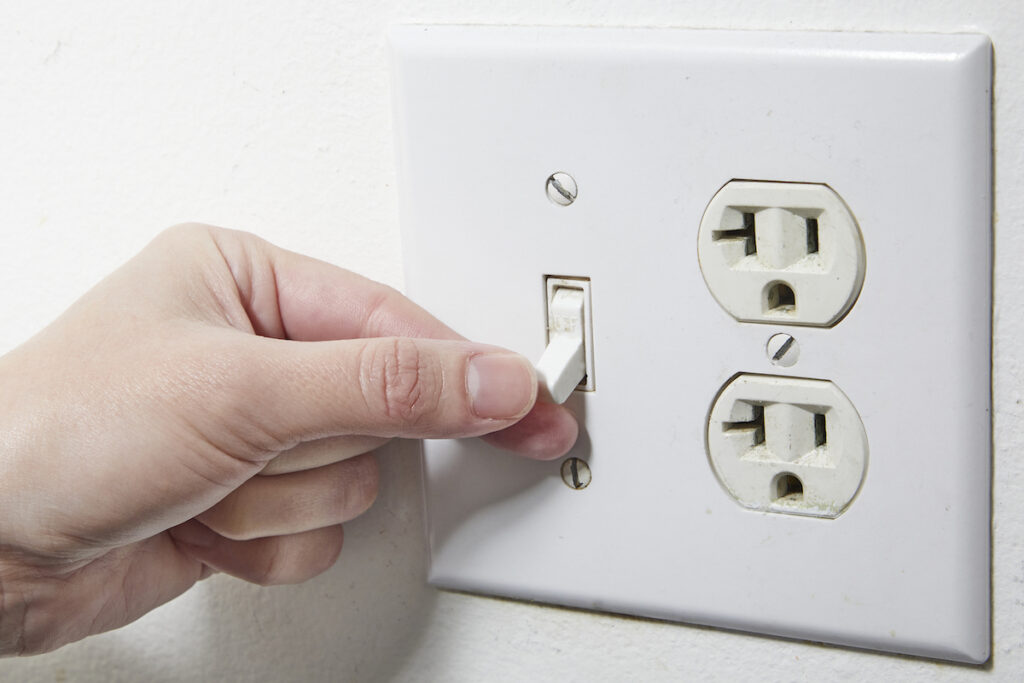
Power outlet not working in your Miami home? Don’t panic. This expert guide walks you through simple DIY fixes for dead outlets & shows you the critical signs you need a pro. Your trusted local Miami electrician.
The Ultimate Miami Homeowner’s Guide to a Dead Power Outlet
You know the moment. It’s a steamy Tuesday morning in Miami. You’re in your kitchen in Brickell, ready to brew that essential first cup of coffee to kickstart your day. You plug in the machine, flip the switch, and… nothing. Silence. The little light on the coffee maker stays dark. You try the toaster in the same outlet. Still nothing. That frustrating feeling of having a dead power outlet is universal, but here in Miami, with our reliance on air conditioning and a dozen other gadgets, a dead outlet feels less like an inconvenience and more like a critical failure.
My name is [Your Name/Company Name], and for the better part of a decade, I’ve been the go-to electrician for homeowners all across Miami-Dade. From the historic, sprawling homes in Coral Gables to the sleek, modern high-rises in South Beach, I’ve seen every possible reason a power outlet is not working. And I can tell you this: before you start worrying about a massive rewiring project or an expensive emergency call-out, there’s a very good chance you can diagnose, and maybe even fix, the problem yourself in the next 15 minutes.
This isn’t just another generic guide. This is a hands-on, step-by-step manual written specifically for you, the Miami homeowner. We’ll walk through the simple DIY checks that solve the issue 80% of the time, understand the unique ways our Florida climate can affect your home’s wiring, and pinpoint the exact moment when you need to stop and call a professional for your own safety. Let’s get your power back on.
power outlet is not working
Alright, let’s roll up our sleeves and get to the bottom of this. The key to troubleshooting any electrical issue is to work methodically, moving from the simplest explanation to the most complex. Don’t just assume the worst. By following these professional-grade diagnostic steps, you’ll be thinking like an electrician, saving yourself time, money, and a whole lot of frustration. We’ll start with the absolute basics—the “Did you check if it’s plugged in?” level of simple—and work our way up.
First, let’s quickly rule out the most common culprit, which often has nothing to do with your wiring. Grab a small, simple appliance that you know for a fact is working. A phone charger is perfect. Unplug whatever was in the dead outlet and plug in your working charger. If your phone starts charging, then congratulations, the outlet is fine! The problem is with your original appliance. It’s a two-minute test that has saved my clients in Key Biscayne hundreds of dollars in service fees. If the charger doesn’t work, however, then we know the outlet or its circuit is the problem, and we can proceed to the next step.
Now, let’s talk about your home’s silent guardian: the circuit breaker panel. This metal box, usually in your garage or a utility closet, is the command center for your home’s electricity. Each switch inside protects a specific “circuit” or area of your home. When it detects an overload (like running a microwave and an air fryer at the same time on one circuit, a common scenario in a busy Downtown Miami apartment) or a fault, it trips, cutting power to that circuit to prevent a fire. Finding a tripped breaker is the #1 reason for a dead outlet. Open the panel door and look for a switch that is out of line with the others. It won’t be fully “ON” or “OFF” but stuck in the middle. To reset it, you must first push it firmly to the “OFF” position, then flip it back to “ON.” If it stays on, you’ve likely solved the problem. However, if it immediately trips again, STOP. Do not force it. This is a clear sign of a more serious issue, like a short circuit, that needs a professional.
Next, we need to hunt for a GFCI. A Ground Fault Circuit Interrupter is a special life-saving outlet you’ll find in areas that might get wet: kitchens, bathrooms, laundry rooms, and garages. They have those little “TEST” and “RESET” buttons on them. Here’s the secret that stumps many homeowners: one GFCI outlet often protects other standard outlets connected to it. This means a tripped GFCI in your master bathroom could be the reason an outlet in your bedroom is dead. Before you panic, scan all your bathrooms and your kitchen. Look for a GFCI outlet and press the “RESET” button firmly. You might hear a click. Go back and check your dead outlet. More often than not, especially in our humid environment, a tiny bit of moisture is all it takes to trip this sensitive device. This is a constant source of service calls in the beautiful, but older, homes in Coconut Grove and Little Havana, where wiring systems can be interconnected in surprising ways. If resetting the GFCI works, you’re back in business. If it won’t reset or the outlet is still dead, the GFCI itself might have failed and needs to be replaced.
If these simple checks don’t restore power, it’s time to dig a little deeper into the “why.” The most common reason a breaker trips in the first place is a simple circuit overload. Your home’s circuits are like highways, each with a speed limit (its amperage, usually 15 or 20 amps). If you put too many “cars” (appliances) on the highway at once, you get a traffic jam, and the breaker shuts it down. This is incredibly common in the home offices of Edgewater and Midtown, where computers, monitors, printers, and chargers all compete for power on a single circuit. The fix is simple: unplug some devices from the circuit and try again. If the problem persists, you might need a dedicated circuit for your high-power equipment.
A more serious cause is a short circuit. This happens when a “hot” wire (black) touches a “neutral” (white) or “ground” (copper) wire. This creates a low-resistance path for electricity to flow, causing a surge of current that instantly trips the breaker to prevent a fire. Shorts can be caused by anything from a pest chewing on wires in the attic to a loose connection within the outlet box itself. Another related issue is a ground fault, which is what GFCIs protect against. This occurs when a hot wire touches a ground wire or a grounded part of an appliance or junction box. Both are serious hazards.
Then there’s the issue of loose connections or an “open circuit.” Over time, especially with the temperature fluctuations and humidity we experience in South Florida, the wires connected to the screws on the back of an outlet can become loose. When a wire isn’t making solid contact, the flow of electricity stops—this is an open circuit. You might notice the outlet works intermittently, or not at all. This is a fire hazard, as a loose connection can create “arcing”—tiny sparks of electricity jumping the gap—which generates intense heat and can ignite surrounding materials. If you’ve ever seen a discolored or slightly melted outlet, this is often the cause. This is particularly a concern in the waterfront homes of Pinecrest and Miami Beach, where salt air can accelerate the corrosion of electrical contacts.
Finally, sometimes the outlet is just old. Receptacles are mechanical devices. The internal springs that grip the prongs of a plug wear out over time. If you notice that your plugs feel loose or fall out of the outlet easily, it’s a clear sign that the receptacle is worn out and needs to be replaced. A worn-out outlet doesn’t just fail to power your devices; it creates a poor connection that can lead to dangerous arcing and overheating.
At this point, if you’ve gone through the DIY checks and are still facing a power outlet not working, you’re likely dealing with one of these deeper issues. And this is where we must talk about safety. There are clear, non-negotiable signs that tell you to stop what you’re doing and call a licensed professional. The first and most critical are your senses of smell and sight. If you smell burning plastic or ozone (a sharp, metallic smell) coming from the outlet, it’s an emergency. Unplug everything from it and do not use it. If you see any black or brown scorch marks on the outlet faceplate, it’s a sign that dangerous overheating has already occurred inside the wall.
Your sense of hearing is just as important. An electrical outlet should be completely silent. If you hear any buzzing, humming, hissing, or crackling sounds, it indicates a serious problem like a loose wire, arcing, or a faulty component. These sounds are a direct warning of an active fire hazard. Do not ignore them.
As we discussed, a breaker that trips repeatedly is your electrical system’s way of screaming for help. If you reset the breaker and it immediately snaps off again, there is a persistent short or overload on that circuit. Forcing it to stay on by repeatedly resetting it can lead to catastrophic failure, including an electrical fire.
If you’ve exhausted all the simple DIY fixes—you’ve tested the appliance, reset the breakers and GFCIs, and the outlet is still dead—it’s time to admit defeat and call in a professional. It’s far better to pay for a diagnostic service call than to risk your safety by attempting repairs you’re not qualified to perform. This is especially true in the unique, artist-loft-style buildings in Wynwood and the Design District, where wiring can be complex and unconventional. Attempting DIY work in these situations can quickly turn a small problem into a major one. Remember, in Miami-Dade County, most electrical work legally requires a permit and must be performed by a licensed electrician. It’s not just a suggestion; it’s the law, designed to protect you and your property.
Your Local Electrical Solution: Expert Outlet Services and Upgrades Across All Miami Neighborhoods
When you’ve reached the limit of your DIY comfort zone, that’s where we come in. Fixing a dead outlet is often a quick job for a professional, but it’s also an opportunity to improve your home’s safety and functionality. The modern Miami home is a hub of technology, and your outlets should reflect that. One of the most popular upgrades we perform is the installation of outlets with built-in USB-A and USB-C ports. This eliminates the need for bulky adapters, cleans up your countertops, and provides fast, efficient charging for all your family’s devices. It’s a simple, affordable luxury that makes a huge difference in your daily life. We can also install “smart” outlets that you can control from your phone, allowing you to turn off appliances remotely, set schedules, and monitor energy usage—a perfect blend of convenience and efficiency.
Our primary goal is always your safety. If you have young children, upgrading to Tamper-Resistant Receptacles (TRRs) is a must. These outlets have internal shutters that prevent a child from inserting foreign objects, providing permanent, reliable protection that’s far superior to temporary plastic caps. Furthermore, given Florida’s notorious lightning storms and power surges, we strongly recommend a layered approach to surge protection. While you might have power strips, installing surge protection outlets for sensitive electronics and, more importantly, a whole-home surge protector at your main panel, provides a robust defense that safeguards every device in your home, from your expensive TV to your refrigerator.
Our team of licensed, insured, and highly-trained electricians provides expert outlet repair and installation for all of Miami-Dade. We’re not a faceless national chain; we’re your neighbors. We understand the specific challenges of our local homes, from the humidity’s effect on wiring in Coconut Grove to the high-power demands of modern condos in Brickell. Whether you have a single power outlet not working or you’re looking to do a full electrical upgrade, we bring the same level of professionalism and attention to detail to every job. We pride ourselves on clear communication, fair pricing, and leaving your home as clean as we found it.
We are proud to offer our full range of electrical services to homeowners in every corner of Miami. No matter where you live, our trucks are ready to roll. Find your neighborhood below to learn more about our dedicated services in your area.
Find Service in Your Neighborhood:
- Brickell: High-rise condo electrical specialists.
- Downtown Miami: Fast service for busy professionals.
- Coral Gables: Experts in historic and luxury home wiring.
- Coconut Grove: Protecting and upgrading Grove’s unique homes.
- South Beach: Your go-to for Art Deco and modern apartment electrical needs.
- Miami Beach: Waterfront property electrical safety and repairs.
- Design District: Custom solutions for creative spaces.
- Wynwood: Servicing lofts, galleries, and residential homes.
- Edgewater: Modern solutions for modern living.
- Midtown: Comprehensive electrical services for condos and townhomes.
- Little Havana: Experienced with the charm and challenges of classic Miami homes.
- Key Biscayne: Salty air corrosion experts and safety upgrades.
- Pinecrest: Family-focused safety and electrical upgrades.
Don’t let a dead outlet disrupt your life or compromise your safety. If you’re in Miami and you have a power outlet that’s not working, you’ve done your part. Now, let us do ours. Call us today at [Your Phone Number] or visit our website to schedule a fast, friendly, and professional service call.